Energize Your Roof
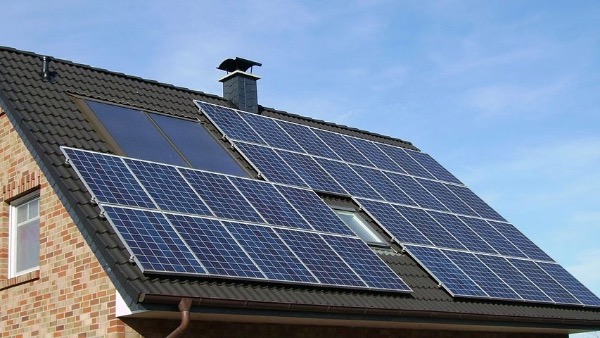
Summary: Catch the Sun
Description
Have you seen solar photovoltaic (PV) panels in your town and wondered if solar is a good fit for you? You can go solar if you are a homeowner with a sunny roof with little or no shading. Let us explain.
HOW PV WORKS
Solar PV safely generates electricity at its site. Your system is connected into the local electric grid. When the sun is shining and you are generating electricity, your meter will run backward. This is called “net-metering.”
- If you generate less electricity than you use over the monthly billing period, Eversource will charge you for the overage at the usual residential electricity rate.
- If you generate more electricity than you use, Everource will put an electricity credit onto your monthly bill - this is not a financial credit, rather a credit for the amount of electricity in kilowatt-hours (kWh). You can use up that credit during the darker months, when you won't produce as much electricity.
- See more details on how Eversource net metering works on EnergySage. (Note: House-mounted solar PV is usually <10 KW, or “Class I,” in size.)
Deep Dive
Please visit EnergySage if you don’t see your question answered below.
HOW TO GET STARTED
There are a LOT of options when it comes to choosing a solar PV system. You will want to do some shopping and comparisons. EnergySage can help.
Energy Sage has solar expertise and a support system for all of your questions. They provide an online solar marketplace that will help you decide whether owning or leasing a solar PV system will work best. You also will be able to directly compare quotes from pre-screened installers. See how it works in their Solar Power Explained video.
In the past decade solar panel installation costs in the U.S. have dropped by around 70% and in the past year alone they’ve dropped 5%. To help you consider installing residential solar power "Bankrate" created this guide that breaks down everything you need to know when financing the installation of solar panels including:
- How much installation costs and how much it can save homeowners
- How financing solar panels works
- The tax benefits of solar power installation
Due to generous state and federal incentives, you can often install a system that will pay for itself in 5-7 years if you have a suitable site!
Q: How do I know if my home is good for solar?
A: You can view your roof on Google Maps. South-facing roofs with little shade are best, but east- and west-facing roofs work well too as long as there is little shade. Ideal roofs have long expanses of open areas but panels can be placed on smaller areas as well. Any installer you contact should be able to tell you on the phone if your roof is a good candidate.
Q: What is the process of going solar?
A: Generally a solar installer will ask for a copy of your electric bill and will prepare a proposed layout and financial estimate based on that and your roof space. Once you have approved the design and signed off on the financials, the solar installer will handle the installation, checking roof structural support, pulling permits, obtaining equipment and scheduling the work. It may be a month or two until installation. Actual installation usually takes 2 days – electrical work and roof racking on day 1 and panel installation on day 2. After building and electrical inspections, your electric company will install a new meter and give you approval to power up your system.
Q: Do I have to maintain my solar system?
Generally the panels will sit up on the roof out of sight and out of mind, powering your home, even on cloudy days. There are no maintenance contracts to buy and New England weather will keep the panels pretty clean.
Q: What happens when it snows?
Snow will pile up on solar panels, but the sun’s energy soon melts the bottom layer next to the panels and the snow will come sliding down quickly. Snow guards are available to protect people and plants under the panels.
Q: What about critters?
If you frequently see squirrels on your roof, you can add critter guards to prevent them from damaging your system wiring.
Q: How do I get paid for the electricity my system sends to the electric grid?
On the days that your system makes more electricity than you consume, your meter will run backward. This is called net-metering. If you underproduce/overconsume over the billing period, Everource will charge you for the total amount of kWhs (kilowatt-hours) for the excess used kWhs at the full residential electricity rate. If your system has overproduced, Everource will not pay you back at the end of the billing period, they will put those kwHs in reserve. You can use up that credit during the darker months, when your panels won't produce as much. If, at the end of a full year, you still have a credit, you can "Schedule Z" it to any other electricity user in your load-zone. You can ask that off taker for $$, or donate it. More info here.
Federal and State Incentives
- Retirees or single earner families with lower incomes may qualify for Mass Solar Loan incentives and see even quicker payback.
- Solar Massachusetts Renewable Target (SMART): The State of Massachusetts pays utility customers a fixed rate per kilowatt hour (kWh) of solar energy produced.
- MA income tax credit of 15% coverage of the system cost, with a $1,000 maximum credit amount.
- In addition to the income tax credit, MA also ensures 100% tax exemption from both sales and property tax payments.
- Solar homeowners receive bill credits from their utility for the energy they are overproducing and sending back to the grid. This is called net-metering.
- Federal Investment Tax Credit (ITC) of 26% of the cost of the system on the total cost of your PV solar energy system. Check these numbers on EnergySage, as they can change over time.
Steps to Take
- Go to EnergySage to get help contacting an installer that’s right for you. They also have a great FAQ.
- Check out the federal and state incentives in the Deep Dive section.
- Contribute a story under the “Testimonials" tab to share your experience!